
The first flakes of the season just fell outside our office window — the kind that sticks to the trees and reminds you that winter is officially here. As the cold settles in, the familiar office banter begins: “Have you turned on your heat yet?”
For many, this comment is half joke, half challenge. But beneath that friendly competition sits a real question homeowners face: how do you keep your home warm without burning through your savings?
As the temperatures dip, conversations in colder areas of the country turn to the relative merits of different heating systems. Should you switch to natural gas or propane? Invest in heat pumps? Add a woodstove to the mix? No matter the path, two themes dominate the conversation — cost and efficiency.
The chart below makes one thing clear: since 2000, heating oil has experienced the steepest and most volatile inflation. Natural gas and propane have had their swings as well, but both ended the period at far lower cumulative inflation levels, with stretches of net deflation along the way. Interestingly, despite bouncing around, propane’s cumulative, long-term inflation ended up almost identical to the blended firewood index — both landing in the high 70% range. Wood, meanwhile, demonstrated slow and steady, inflation rates, a rarity in the energy world.

Where you live dramatically influences your heating options. While natural gas is the dominant fuel source in most of the country, home heating oil dominates in New England. And in more rural areas of the region like Vermont, the limited pipeline infrastructure, challenging geography, and frigid winters mean homeowners must rely heavily on delivered fuels like propane and wood (see chart to below ).
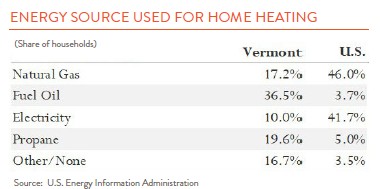
In high school and college, I worked alongside my father installing heating systems — including the not-so-glamorous job of cutting an old oil tank in half so it could be hauled out of a basement. Switching heating sources isn’t just a technical decision; it’s a financial one. For many economically challenged families, such upfront costs can be a major barrier to making the change they want.
Here In the Northeast, winters can feel like an extreme sport, often involving sub-zero temperatures. Until recently, the climate made electric heat a poor choice as it relied on inefficient resistance-based systems like space heaters or baseboard heat. Heat pumps have changed that story, but only recently. Early systems struggled in extreme cold. The newest generation, however, performs efficiently at much lower temperatures making them a viable electric option for more of the year. And heat pumps offer a major bonus: cooling in the summer.
We recently installed a heat pump in our home and love it, and plan to add more as our budget allows. Despite Vermont’s reputation, the weather can be brutally hot and humid. In 2025, the state experienced a temperature swing from –29°F in February to 99°F in June — a staggering 128-degree range. Our heat pump works well in these conditions and also during the shoulder seasons of fall and spring. We often run ours instead of firing up the main heating system, helping to cut costs. With our solar panels helping offset electricity costs, there’s also a small environmental benefit from using less fossil fuel.
In the end, there’s no single “right” way to heat your home — only the solution that best fits your budget, your house, and your tolerance for winter’s extremes. What the data makes clear is that our choices are evolving, and technologies like modern heat pumps are giving homeowners more flexibility than ever. As prices shift and efficiencies improve, the smartest approach is simply staying informed and choosing the mix that keeps your home comfortable without stretching your wallet.
